
Herringbone Hardwood in Entryways and Dining Rooms
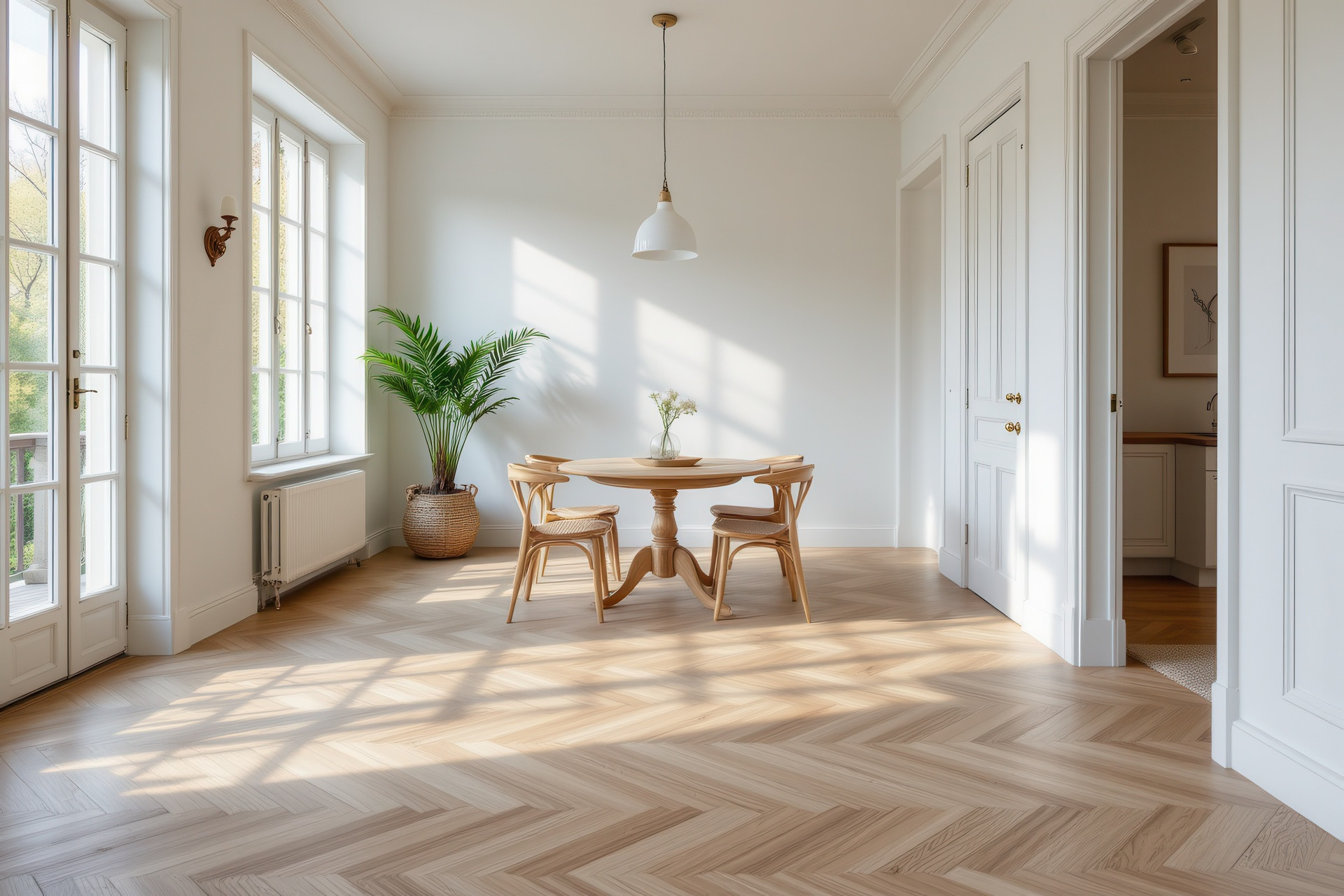
It’s one of those patterns that has been around for centuries and somehow never looked dated a single day of its life. And right now, in homes across Bellevue, Kirkland, and Medina, it’s showing up in exactly the two rooms where it makes the most dramatic impact: entryways and dining rooms.
Why These Two Rooms in Particular
Not every room calls for a statement floor. Bedrooms are personal and quiet. Living rooms need to accommodate furniture arrangements and area rugs. But entryways and dining rooms? Those are the rooms that are meant to be seen.
Your entryway is the first thing guests experience when they step inside your home. It sets the tone for everything that follows. A herringbone hardwood flooring pattern laid in that space communicates something immediately: this home was put together with care. It doesn’t need a console table or a piece of art to make the entry feel finished. The floor does that work on its own.
Dining rooms operate similarly. You’re seated, eye level drops, and the floor becomes part of the visual experience of the meal. A straight-lay plank simply sits there. Herringbone moves. It draws the eye inward, creates a natural sense of enclosure, and makes the table feel anchored in a way that a standard layout rarely achieves.
The Pattern Itself: What Makes It Work
Herringbone is made up of rectangular planks laid at 45-degree angles to each other, creating a continuous V-shaped zigzag across the floor. The geometry is precise, which is part of what gives it such a strong presence. Unlike more casual patterns, herringbone has structure. It reads as deliberate from across the room.
The width of the plank changes the character considerably. Narrower planks, around two to three inches, produce a tighter, more intricate pattern that leans traditional and formal. Wider planks open the pattern up, making it feel more relaxed and contemporary. For a Bellevue craftsman home with original architectural details, narrower tends to complement the bones of the space better. For a modern open-plan home in Sammamish or Redmond, wider planks in a pale white oak let the pattern breathe.
Species and Finish: Getting the Combination Right
Oak is the most common species used for herringbone, and for good reason. Its consistent grain doesn’t compete with the geometry of the pattern, it supports it. White oak in particular has become the go-to choice for homeowners who want herringbone with a clean, contemporary edge. The subtle variation in tone across the planks adds depth without chaos.
For a warmer, richer result, red oak stained in a medium walnut or cognac tone brings the traditional side of herringbone fully to life. It’s the kind of floor you’d find in a well-appointed dining room in Medina or Clyde Hill, the sort of space where the floor feels like it was always supposed to be there.
Finish matters too. A matte or satin sheen keeps the focus on the pattern and the wood grain. High-gloss finishes tend to flatten the visual texture that makes herringbone interesting in the first place. If you’re going through the effort and investment of this layout, a finish that lets the geometry speak for itself is always the right call.
The Installation Reality
Herringbone is not a beginner installation. The precision required to keep the angles consistent across an entire entryway or dining room is significant, and any deviation compounds as it moves across the floor. This is one of those projects where the quality of the hardwood installation matters just as much as the quality of the product itself. An experienced installer who has worked with patterned layouts will make the difference between a floor that looks exceptional and one that looks slightly off in a way that’s hard to put your finger on but impossible to ignore.
Subfloor preparation is also more demanding with herringbone than with standard straight-lay installations. Any unevenness in the subfloor gets amplified by the angled planks. Getting that foundation right before a single board goes down is non-negotiable.
Is It Worth It?
For the right rooms, absolutely. Herringbone commands attention in a way that few other flooring choices can, and it does so with a timelessness that trends-based decisions rarely achieve. Homeowners who invest in it consistently say the same thing: they walk past that room every day and it still gets them.
Bring Your Entryway or Dining Room to Life
If herringbone has been in the back of your mind, it’s worth seeing samples in your actual space before making any decisions. We are here to help you find the right species, plank width, and finish for your home. Schedule an in-home measure with our flooring experts at Carpet To Go in Bellevue, WA, and we’ll bring the showroom directly to you.